
Pakistan’s geography is one of the most diverse and complex in the world. From the towering peaks of the Karakoram and Himalayas to vast plains, deserts, and coastal regions, understanding the country’s terrain is not simple. Yet, most people still rely on flat maps, digital screens, or satellite images that fail to explain elevation, depth, and real spatial relationships.
This creates a real problem for educators, planners, architects, developers, museums, and institutions who need clarity, not just visuals.
That’s where Pakistan 3D Terrain Relief Maps created as 3D Architectural Models offer a powerful solution.
At BD3D, a specialist in 3D Architectural Model Making & Manufacturing, we create on-demand Pakistan 3D terrain relief maps that transform complex geographic data into accurate, physical models designed for understanding, presentation, and long-term use.
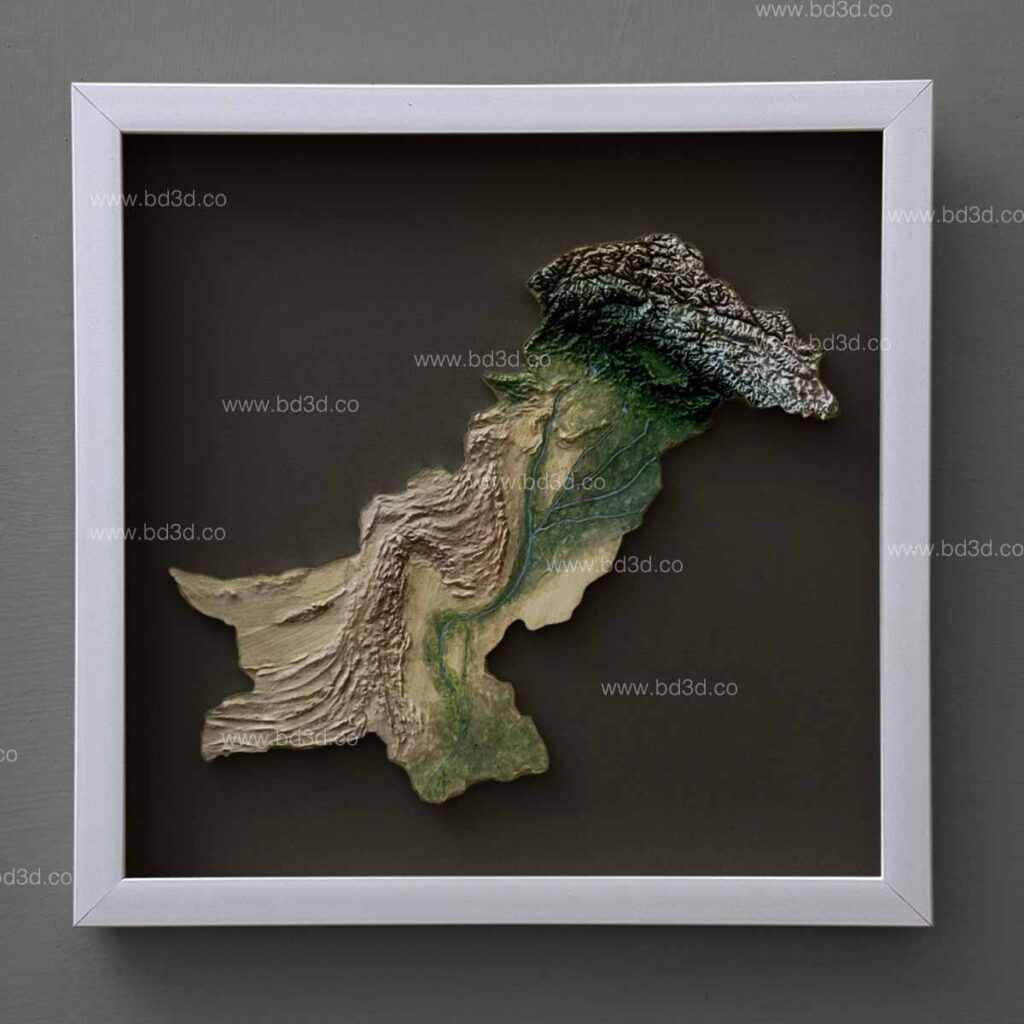
Why Understanding Pakistan’s Terrain Is a Challenge
Pakistan’s geography directly affects climate, infrastructure, urban development, water systems, and even economic planning. However, traditional maps often oversimplify this complexity.
Problems with Flat and Digital Maps
- No real sense of elevation or depth
- Mountain ranges appear misleadingly flat
- Valleys, river systems, and plateaus are hard to visualize
- Scale is often misunderstood
- Limited impact in presentations or exhibitions
For anyone who needs to explain, teach, or plan, these limitations cause confusion rather than clarity.
A Pakistan 3D Terrain Relief Map, built as a physical 3D Architectural Model, solves these issues instantly.
What Is a Pakistan 3D Terrain Relief Map?
A Pakistan 3D Terrain Relief Map is a physical, scaled representation of the country’s topography, accurately showing mountains, plains, deserts, rivers, and coastal regions using real-world elevation data.
Unlike 2D maps or screen-based visuals, a physical relief map allows people to:
- Instantly understand elevation changes
- See how regions connect spatially
- Grasp geographic scale without explanation
- Engage with the map visually and physically
At BD3D, these maps are produced as 3D Architectural Models, ensuring precision, durability, and visual clarity.
Why 3D Architectural Models Are Essential for Terrain Mapping
Terrain modeling is not just about making something look impressive, it’s about accuracy, proportion, and communication.
The Role of 3D Architectural Models
Professional 3D Architectural Models bring:
- Precise scale and proportion
- Accurate elevation representation
- Structural stability and long-term durability
- Clear visual storytelling
Architectural modeling standards ensure that terrain is not exaggerated or misleading, which is crucial for educational and professional use.
This is why BD3D applies architectural model-making expertise to all terrain relief projects.
Pakistan’s Geographic Complexity Explained Through 3D Architectural Models
Pakistan’s terrain includes some of the most extreme and varied landforms on Earth. Representing this accurately requires expert modeling.
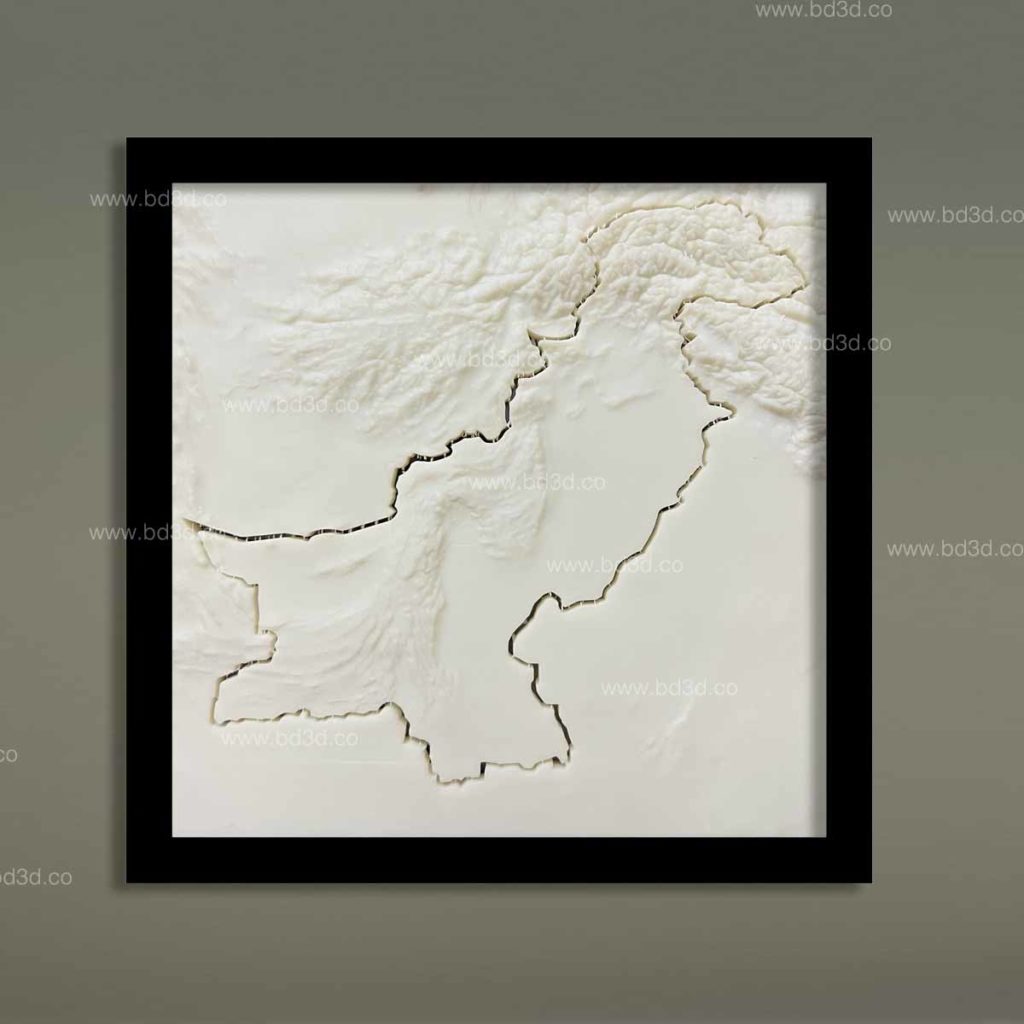
Key Geographic Features Shown in a 3D Terrain Relief Map
- Karakoram, Hindu Kush, and Himalayan mountain ranges
- Indus River system and tributaries
- Punjab plains and agricultural regions
- Balochistan plateau and deserts
- Coastal areas along the Arabian Sea
A physical 3D relief map allows all of these features to be understood at a glance; something flat maps struggle to achieve.
How BD3D Creates Pakistan 3D Terrain Relief Maps
Our Process for 3D Architectural Models
At BD3D, our focus is on solving one main problem: making complex terrain easy to understand.
Step 1: Real Terrain Data Collection
We begin with reliable and up-to-date geographic and elevation data to ensure:
- Accurate mountain heights
- Correct slopes and valleys
- Realistic landform transitions
This ensures the model reflects real-world geography.
Step 2: Digital Terrain Modeling
Our designers convert raw data into refined digital terrain models by:
- Cleaning and correcting elevation data
- Adjusting scale for clarity
- Preparing models for physical production
This step ensures accuracy before manufacturing begins.
Step 3: Precision Manufacturing
Using advanced fabrication methods, we produce:
- Clean terrain layers
- Sharp geographic details
- Strong and stable bases
These models are built to last, whether used in exhibitions or professional environments.
Step 4: Hand Finishing & Detailing
Each Pakistan 3D terrain relief map is finished by hand, including:
- Natural or custom color schemes
- Highlighted mountain ridges and valleys
- Optional framing or display mounts
This finishing stage gives BD3D’s 3D Architectural Models their premium look and feel.
Who Uses Pakistan 3D Terrain Relief Maps?
Pakistan 3D terrain relief maps serve a wide range of industries and institutions.
Common Use Cases
- Educational Institutions: Geography, environmental studies, and urban planning
- Museums & Exhibitions: Interactive and engaging displays
- Architects & Developers: Contextual understanding of regional terrain
- Government & Planning Bodies: Infrastructure and development visualization
- Corporate & Cultural Displays: High-impact geographic presentations
In every case, the goal is the same: clear understanding of terrain.
Why Physical 3D Architectural Models Outperform Digital Maps
The Advantage of Physical Terrain Models
Digital maps are useful, but they often fail to communicate complexity clearly, especially to non-technical audiences.
Key Advantages of Physical 3D Architectural Models
- No learning curve for viewers
- Instant depth and elevation perception
- Strong engagement during presentations
- No reliance on screens or software
- Long-term durability
A physical relief map becomes a permanent communication tool, not a temporary visual.
Customization Options for Pakistan 3D Terrain Relief Maps
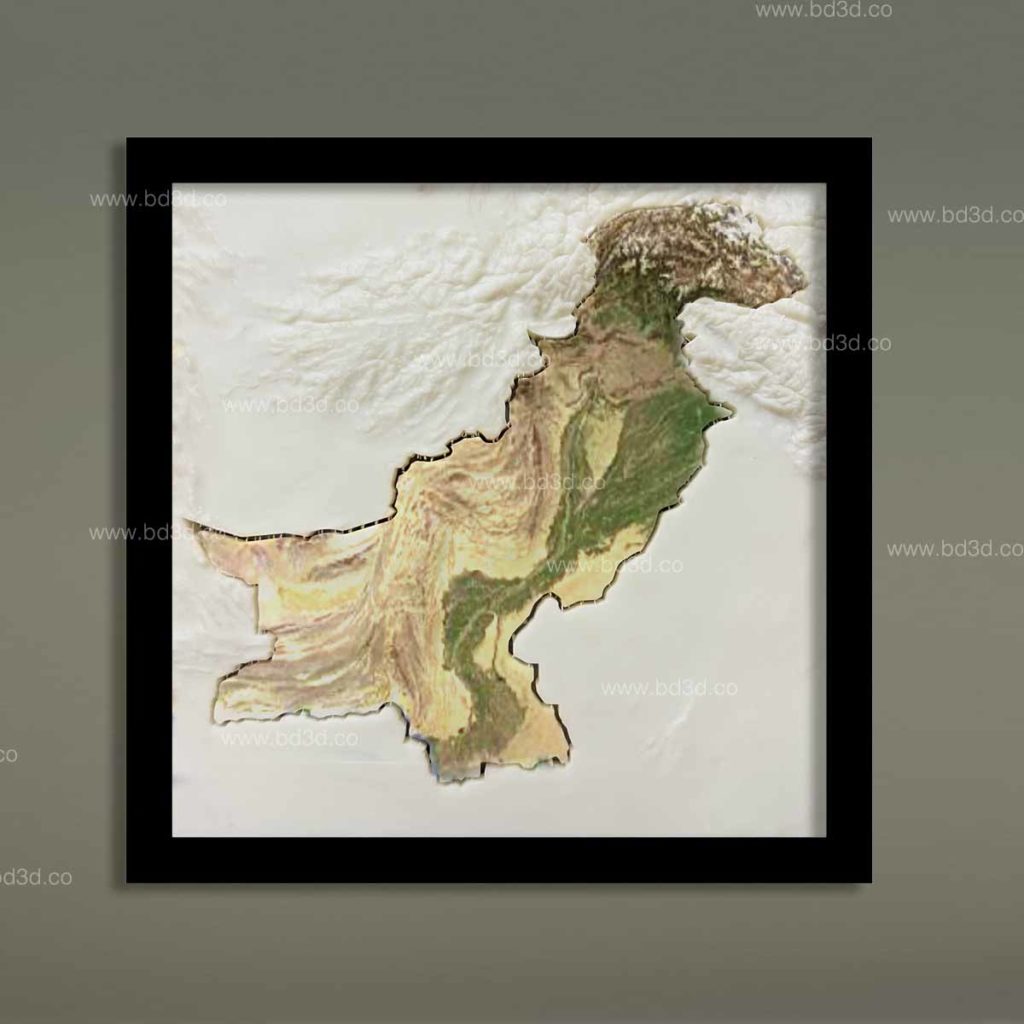
As an on-demand 3D Architectural Model Making & Manufacturing company, BD3D offers full customization.
Custom Options Include:
- Model size and scale
- Wall-mounted or tabletop formats
- Framed or unframed displays
- Natural, monochrome, or artistic finishes
- Optional geographic labeling
This flexibility allows clients to order models tailored to their specific needs.
Accuracy and Reliability in 3D Architectural Models
One of the biggest issues with poorly made terrain models is inaccuracy. Incorrect elevation or distorted proportions can mislead rather than inform.
At BD3D:
- Real geographic data is always used
- Scale and elevation are carefully calibrated
- Models are reviewed for consistency and clarity
This commitment ensures each Pakistan 3D Terrain Relief Map serves as a reliable reference.
Pakistan 3D Terrain Relief Maps as Educational & Display Solutions
Beyond technical use, these maps also function as:
- Educational tools for all age groups
- Cultural representations of national geography
- Conversation-starting display pieces
They help people connect with Pakistan’s landscape in a tangible and memorable way.
Why Choose BD3D for 3D Architectural Models of Pakistan
Choosing the wrong model maker can lead to:
- Inaccurate terrain representation
- Fragile construction
- Poor finishing quality
BD3D solves these problems through:
- Architectural-level precision
- On-demand custom manufacturing
- High-quality materials
- Attention to detail at every stage
Our experience in 3D Architectural Models ensures each project delivers clarity, accuracy, and visual impact.
Final Thoughts
Pakistan’s terrain cannot be fully understood through flat maps alone. Its mountains, plains, deserts, and rivers demand depth, scale, and physical presence.
A Pakistan 3D Terrain Relief Map created as a 3D Architectural Model transforms complex geographic data into something clear, accurate, and easy to understand.
At BD3D, we specialize in producing on-demand terrain relief maps that solve real visualization problems for educators, planners, institutions, and organizations.
If you are looking for Pakistan 3D Terrain Relief Maps built as professional 3D Architectural Models, BD3D delivers precision, reliability, and lasting value.