
Water infrastructure projects are built to improve public health and quality of life, but explaining these projects to the communities they serve is not always straightforward. Technical drawings, engineering plans, and digital renderings provide the information professionals need, yet they can be difficult for local communities, stakeholders, and funding organizations to interpret. Through 3D Architectural Model Making & Manufacturing, these complex designs can be transformed into physical models that make projects easier to understand before construction begins.
One of the biggest challenges in community-focused infrastructure projects is communication. People want to know how a new filtration plant or water treatment facility will fit into their surroundings, what the completed project will look like, and how different structures connect. Working with an experienced 3D model making company helps bridge this communication gap by converting technical information into realistic physical models that everyone can understand, regardless of their technical background.
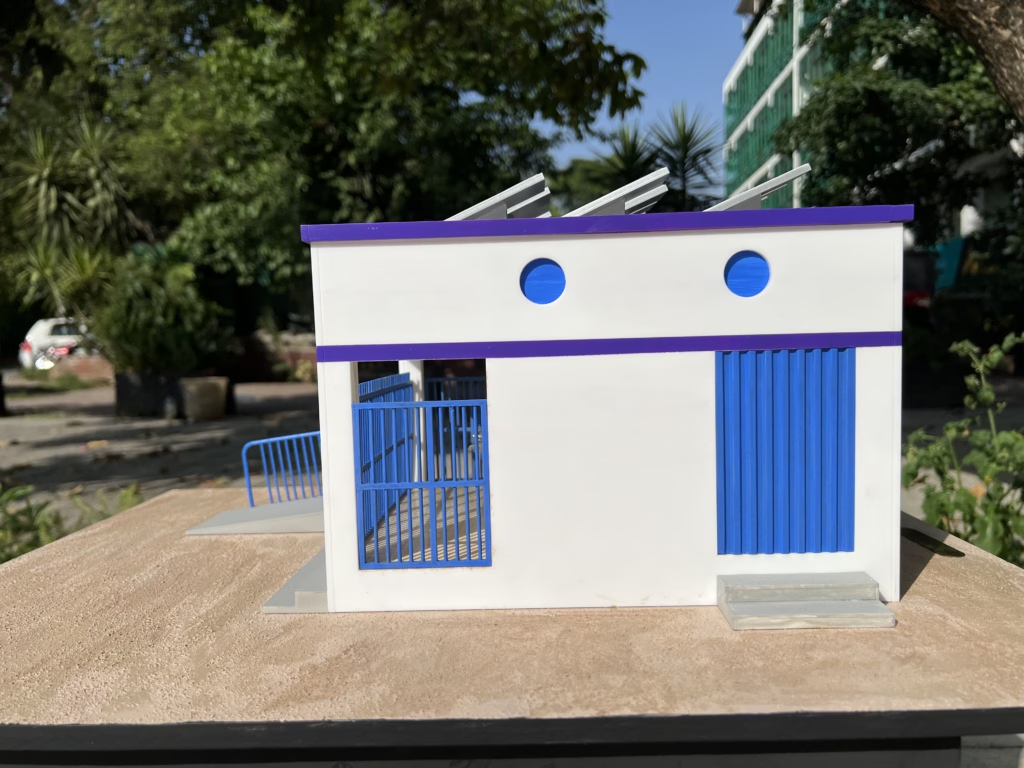
The Human Appeal Filtration Plant project demonstrates how this process works in practice. Using the client’s architectural drawings, BD3D first developed a detailed digital model for review and verification. Once the design was approved, the team manufactured a 2’2″ physical model that accurately represented the filtration plant. Rather than serving as a simple display, the model became a practical communication tool that helped stakeholders clearly visualize the project before construction moved forward.
How 3D Architectural Model Making & Manufacturing Improves Communication for Water Projects
Water projects involve multiple stakeholders, including engineers, architects, donors, local authorities, and the communities that will ultimately benefit from the completed infrastructure. While technical teams can interpret engineering drawings, most community members cannot easily visualize the finished facility from plans alone.
Physical 3D architectural models solve this problem by presenting the project in a way that is immediately understandable. Instead of asking people to interpret complex technical information, they can view a scaled representation of the proposed filtration plant and understand its overall layout, proportions, and relationship between different structures.
For projects supported by humanitarian organizations such as Human Appeal, this clarity becomes especially valuable because the objective extends beyond construction—it also involves building confidence among stakeholders and demonstrating how the project will serve the community.
The Human Appeal Filtration Plant Project
The Human Appeal Filtration Plant required more than an accurate scale model. The project needed a reliable process that ensured every architectural detail reflected the approved design before manufacturing began.
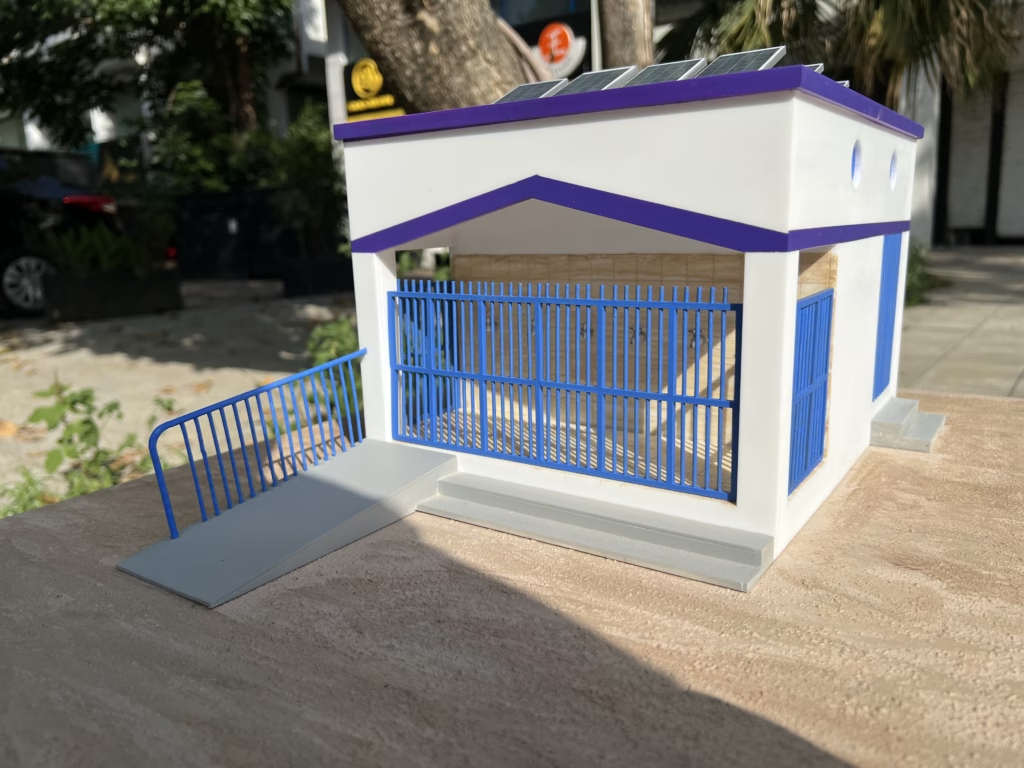
The client supplied architectural drawings that formed the foundation of the project. Rather than immediately producing the physical model, BD3D first converted these drawings into a detailed three-dimensional digital model. This allowed every important feature to be reviewed before moving into production.
This verification stage played an important role in the overall success of the project. It provided an opportunity to confirm dimensions, building layouts, and structural relationships while ensuring the final model would accurately represent the approved design.
Only after the digital model was verified did production begin on the 2’2″ physical model, ensuring the finished piece reflected the client’s vision with precision.
From Drawings to a Verified Physical Model
Every successful infrastructure model begins with accurate planning. Experienced architectural model makers understand that physical production should only begin once the design has been carefully reviewed and approved.
For the Human Appeal Filtration Plant, the workflow followed a structured process:
- Client-provided architectural drawings were reviewed.
- A detailed digital 3D model was created.
- The digital model was verified with the client.
- Required refinements were incorporated.
- The approved design was manufactured as a 2’2″ physical model.
This approach reduced the possibility of errors while ensuring the completed model accurately represented the proposed filtration plant.
Instead of making adjustments after production had started, verification at the digital stage provided greater confidence throughout the manufacturing process.
Helping Communities Understand Infrastructure
Infrastructure projects are often judged not only by their engineering quality but also by how effectively they are communicated to the people they impact.
The completed Human Appeal filtration plant model provided a clear visual reference that simplified discussions between project teams and stakeholders.
Instead of relying on drawings alone, viewers could immediately understand:
- The overall layout of the filtration plant.
- The relationship between individual structures.
- The scale of the proposed facility.
- How different areas connected within the project.
- The overall appearance of the completed development.
By removing uncertainty, the model helped create more productive discussions and improved understanding among audiences with varying levels of technical knowledge.
Why Choosing the Right 3D Model Making Company Matters
Creating infrastructure models requires far more than reducing architectural drawings to scale. It requires technical understanding, manufacturing expertise, and careful attention to detail.
An experienced 3D model making company understands how to translate engineering information into highly accurate physical representations while preserving the design intent behind every project.
For the Human Appeal Filtration Plant, the combination of verified digital modelling and precision manufacturing ensured that the final model served as a reliable communication tool rather than simply a presentation piece.
This level of accuracy is what distinguishes professional 3D Architectural Model Making & Manufacturing from basic model production.
Lessons Learned from the Human Appeal Filtration Plant Project
Every infrastructure project presents unique communication challenges. While architects and engineers are familiar with technical drawings, community representatives, donors, and project partners often need a clearer way to understand what is being proposed. The Human Appeal Filtration Plant project demonstrated that creating a physical model is not simply about reproducing a design—it is about making complex information accessible to everyone involved.
One of the most valuable aspects of the project was the decision to verify the design digitally before manufacturing began. Rather than moving directly from drawings to production, the digital model provided an opportunity to review every important detail, ensuring the final physical model accurately reflected the approved design. This approach reduced uncertainty and helped deliver a model that stakeholders could trust.
For community-focused developments, this process is especially important because even small misunderstandings can affect discussions, planning, and project presentations. A verified model gives everyone confidence that the design being presented is the same design that has been approved.
Why Verification Before Manufacturing Matters
Verification is one of the defining steps in professional 3D Architectural Model Making & Manufacturing. It helps identify potential issues early, when changes can still be made efficiently, instead of after physical production has started.
For the Human Appeal Filtration Plant, creating the digital model first allowed the client to confirm that every structural element aligned with the original drawings. Once approval was received, manufacturing could proceed with confidence.
This process offers several advantages:
- Ensures the model reflects the approved architectural design.
- Reduces the risk of manufacturing errors.
- Saves time by minimizing revisions after production.
- Gives stakeholders confidence in the final presentation.
- Improves the overall quality of the finished model.
Experienced architectural model makers understand that careful planning before manufacturing is just as important as the manufacturing process itself.
The Role of an Architectural Model Making Company in Community Projects
Community infrastructure projects require clear communication at every stage. Whether the audience includes local residents, government representatives, humanitarian organizations, or funding partners, everyone needs to understand the project in a simple and accurate way.
A professional architectural model making company helps achieve this by converting technical information into physical models that communicate ideas without requiring specialist knowledge.
For the Human Appeal Filtration Plant, the completed model provided a shared visual reference that supported discussions and project presentations. Instead of relying solely on engineering documents, stakeholders could examine the physical model to better understand the layout, proportions, and design of the proposed facility.
This approach makes collaboration more effective because everyone is working from the same visual representation.
Choosing the Right 3D Model Making Company
Not every 3D model making company follows the same production process. The quality of an architectural model depends on careful planning, technical expertise, precision manufacturing, and attention to detail.
Projects such as filtration plants require more than visual appeal. They demand accuracy, consistency, and a workflow that minimizes the possibility of errors before production begins.
At BD3D, every project follows a structured process:
| Stage | Purpose |
|---|---|
| Drawing Review | Understand the client’s design intent. |
| Digital 3D Modelling | Convert technical drawings into a detailed digital model. |
| Client Verification | Confirm accuracy before production begins. |
| Physical Manufacturing | Produce the approved architectural model. |
| Quality Inspection | Ensure the finished model meets project requirements. |
This structured workflow ensures that the final model is both technically accurate and visually effective.
Why Physical Models Continue to Matter
Digital technologies have transformed the design industry, but physical models remain one of the most effective ways to communicate infrastructure projects.
A physical model allows people to:
- View the project from every angle.
- Understand scale and spatial relationships.
- Discuss design features together.
- Build confidence in the proposed development.
- Better understand how the project will serve the community.
For humanitarian and public infrastructure projects, this clarity helps create stronger engagement between project teams and the people the development is intended to benefit.
Conclusion
The Human Appeal Filtration Plant project demonstrates how physical architectural models can simplify complex infrastructure projects and improve communication with communities, stakeholders, and project partners. By beginning with client-provided drawings, developing a verified digital model, and then producing a precise 2’2″ physical model, BD3D ensured that the final presentation accurately reflected the approved design.
Effective 3D Architectural Model Making & Manufacturing is about more than creating a scale model. It is about transforming technical information into a format that people can easily understand, helping projects move forward with greater clarity and confidence. As an experienced 3D model making company, BD3D works closely with clients to produce high-quality 3D architectural models that support planning, presentations, and community engagement.
If you’re planning a water infrastructure, humanitarian, or public development project, explore BD3D’s Services, Portfolio, National Projects, International Projects, and Contact page to discover how professionally crafted architectural models can help communicate your vision with accuracy and confidence.